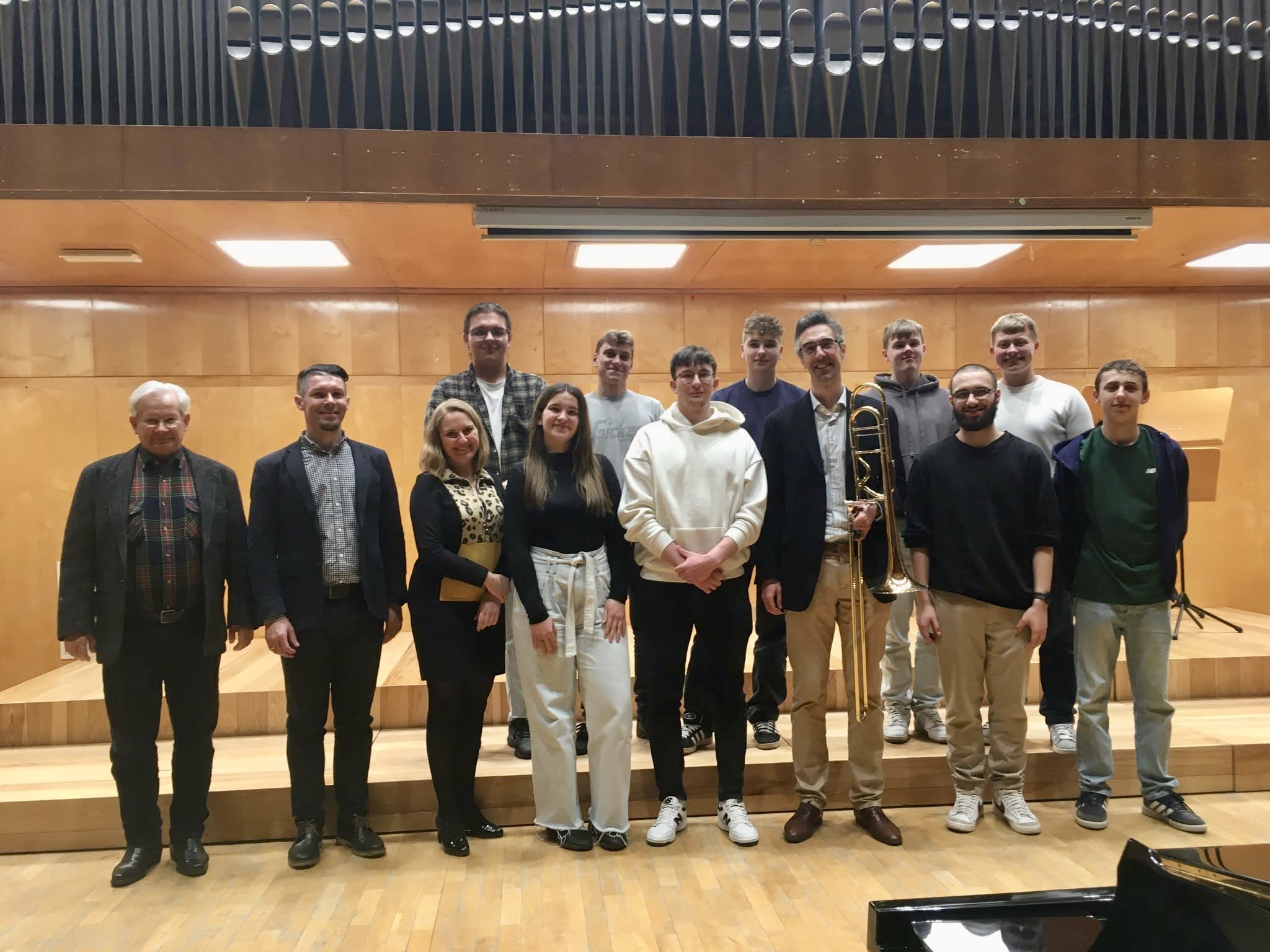
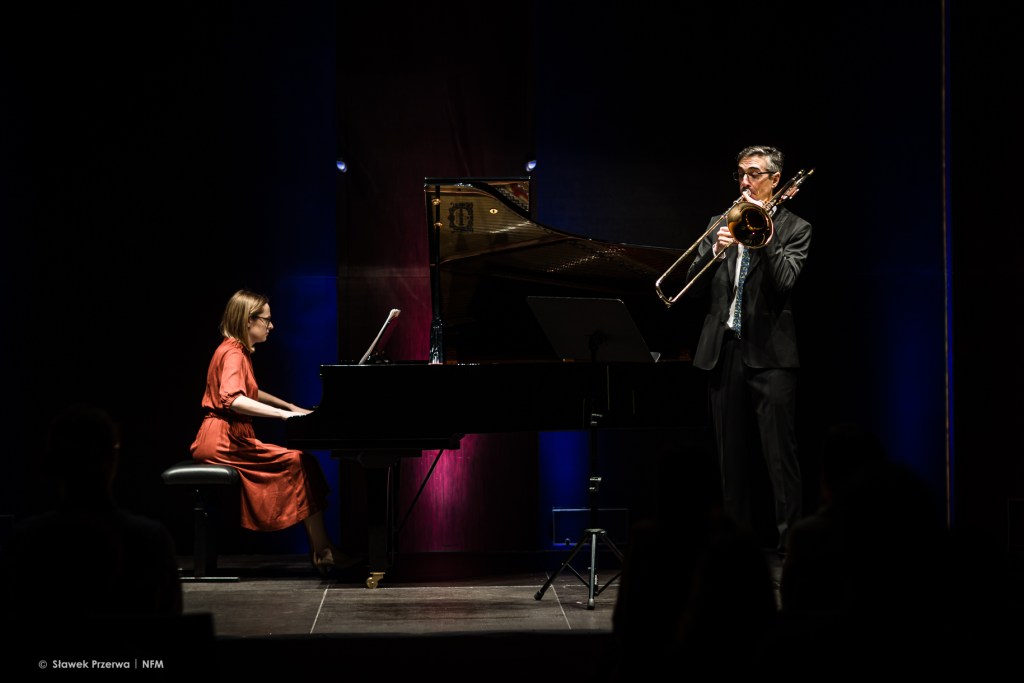
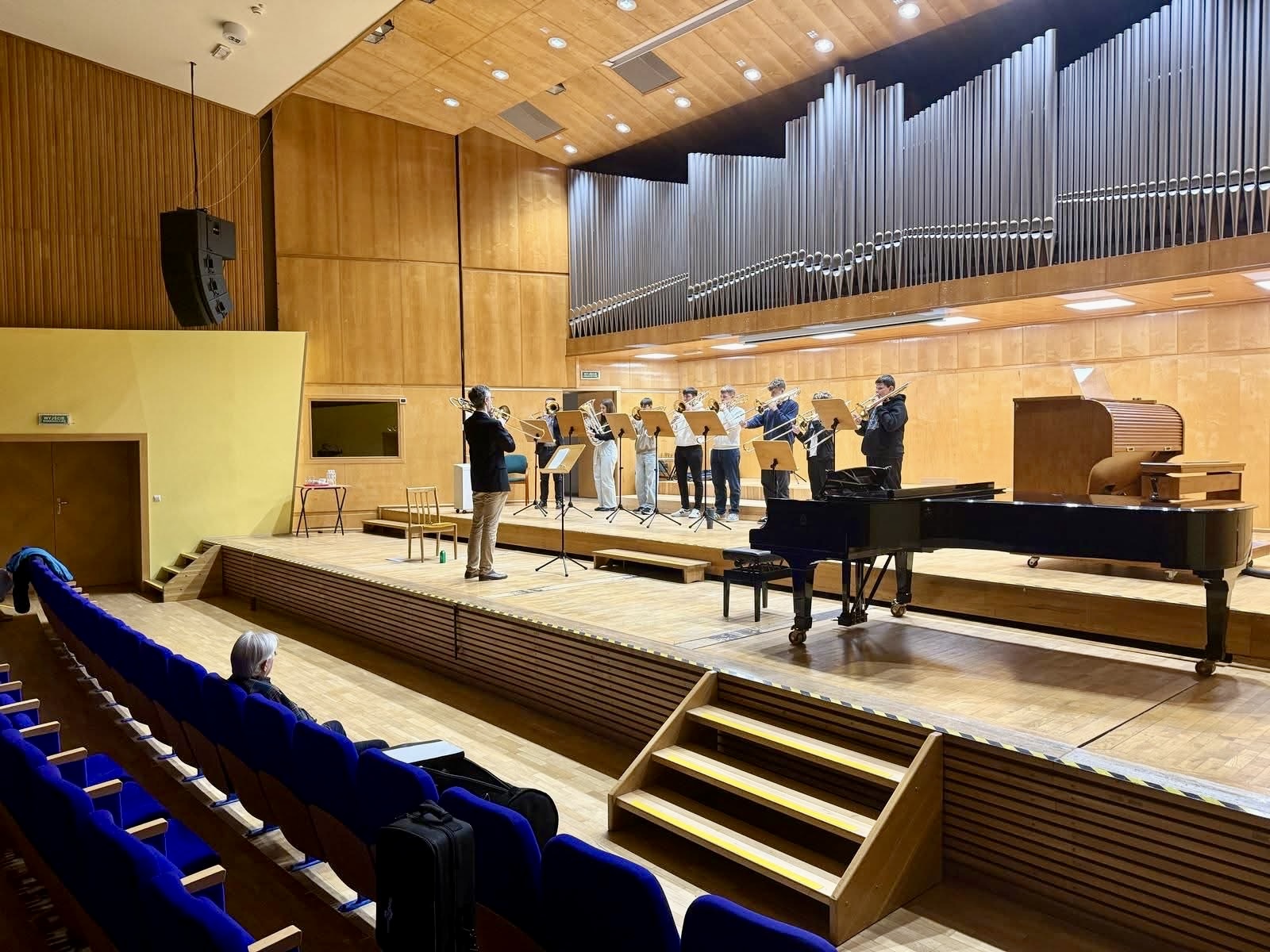
My recent visit to PSM I i II stopnia im. F. Chopina, in Opole was truly uplifting, it encompassed an inspiring blend of musical collaboration, focused mentorship, and genuine human connection. Spending the day with the school’s talented tenor and bass trombonists, along with the euphonium students, was both a pleasure and a privilege.

We started our day with a group warm-up session, where I shared my personal warm-up philosophy, which treats the routine as much more than a technical ritual. Together, we explored a detailed sequence aimed at activating key aspects of our playing: breath support, embouchure flexibility, clear articulation, and precise slide movement. I emphasised the value of working with a metronome and tuner, the importance of taking breaks, and the necessity of minimising tension. A good warm-up, in my view, does more than prepare us physically, it cultivates discipline, awareness, and the kind of habits that fuel lasting growth.

The afternoon was devoted to individual lessons. These one-on-one sessions allowed for deeper focus on elements like posture, embouchure, breathing, and interpretation. It was incredibly rewarding to witness the students’ receptiveness and commitment. Guiding them toward greater confidence and musical expression.

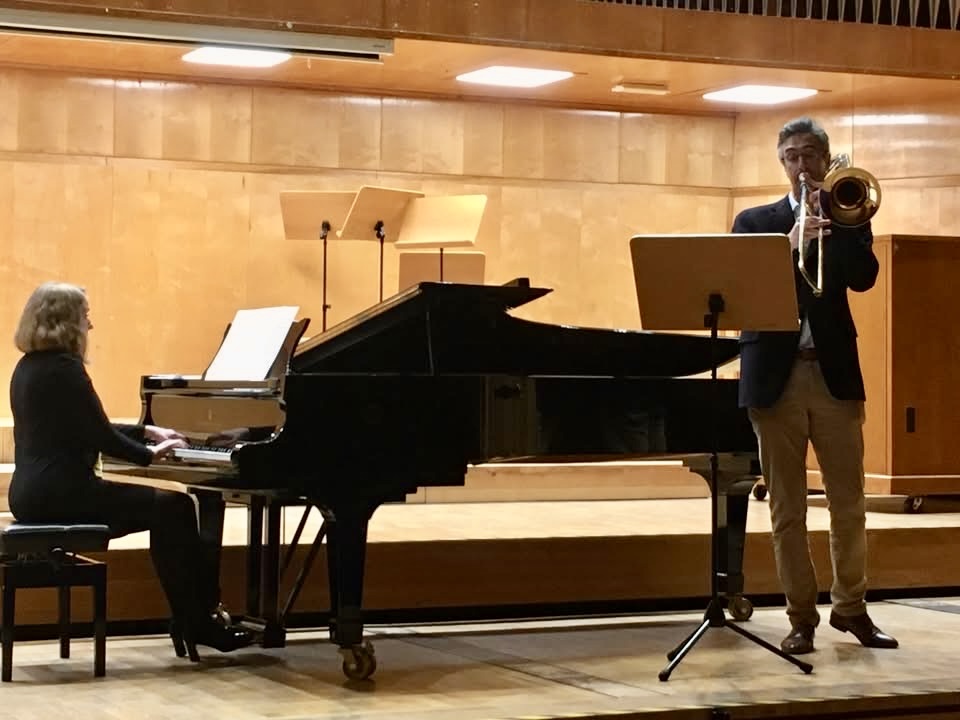
In the evening, I had the chance to perform a short recital, joined by the school’s trombone quartet. My performance featured works by Jorgensen, Galliard, and Low, each piece offering distinct textures and expressive opportunities as well as demonstrating the range and capabilities of the instrument as a solo voice. Sharing the stage with such promising young artists was a real highlight.

I’m deeply thankful to Professors Roland Mendel, Harald Powrósło, and Janusz Wyrwał for their warm invitation, excellent organization, and unwavering dedication to their students. Their efforts shine through in the vibrant, curious musical spirit I encountered all day.

I left Opole feeling energized and full of gratitude. I truly look forward to returning, continuing these meaningful exchanges.
The Blended International Project (BIP) Trombone event, held from November 29th to December 3rd, 2024, at the Royal Conservatory of Music in Madrid, was a truly inspiring celebration of musical collaboration and cultural exchange. Thanks to the generous support of the Erasmus+ program, funded by the European Union, this initiative provided an invaluable opportunity for students and educators from across Europe to come together, share knowledge, and grow both artistically and professionally.

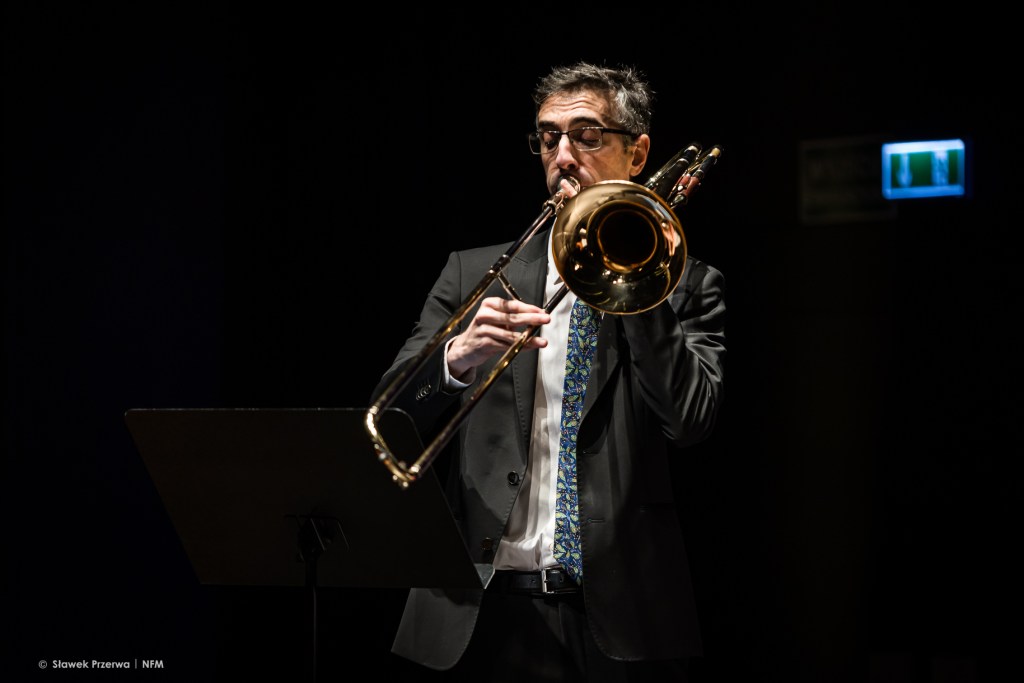
Spearheaded by Professor Elies Hernandis, the event brought together students and faculty from six esteemed European conservatories—Copenhagen, Wroclaw, Liège, Salzburg, Karlsruhe, and Madrid. I had the privilege of contributing by leading a warm-up session, where I was able to demonstrate and discuss an aspect of trombone playing that I believe is deeply important. Additionally, I helped prepare the student ensemble for a performance of Eric Ewazen’s intricate and profoundly moving composition, Posaunenstadt—a piece that holds special significance for me. Watching the ensemble evolve over five days was immensely rewarding, as they embraced Ewazen’s lush harmonies and intricate phrasing with both precision and expressiveness.

A particularly meaningful part of this experience was collaborating with José Antonio Cubas, a dear friend and mentor whose guidance has significantly influenced my journey as a musician and educator. His insight and support have been a constant source of inspiration, making it especially rewarding to share this experience with him.

The event was further enriched by the participation of exceptional professors, including Jesper Juul Windahl, Dany Bonvin, Sándor Szabo, Simeón Galduf, José Antonio Cubas and Elies Hernandis. Each of them brought their unique expertise and artistry to the project, creating an engaging and dynamic learning environment that left a lasting impact on the students.

Of course, none of this would have been possible without Sara Erro’s dedication behind the scenes. Her meticulous planning, professionalism, and kindness ensured that everything ran smoothly. Her efforts allowed students and faculty to focus entirely on the music, making the event not only a success but an absolute pleasure to be part of.

The Erasmus+ program continues to be a driving force in fostering international collaboration in higher education, and its impact on music conservatories is truly profound. Initiatives like BIP Trombone give students and faculty the chance to engage in exchange programs, joint artistic projects, and cross-cultural learning experiences, all of which are invaluable in shaping their artistic and professional growth.

Looking back, BIP Trombone was far more than just a week of rehearsals and performances—it was a testament to the power of music to unite people, spark creativity, and build lasting connections across cultures. I’m deeply grateful to have been part of such a remarkable project, to have shared it with incredible colleagues and mentors, and to have witnessed the dedication and artistry of the participating students. A heartfelt thank you to Elies Hernandis for his vision and leadership in bringing this event to life—his passion for music education and international collaboration was at the core of its success. Experiences like this remind us why we do what we do, and I look forward to seeing the lasting impact it will have on everyone involved.

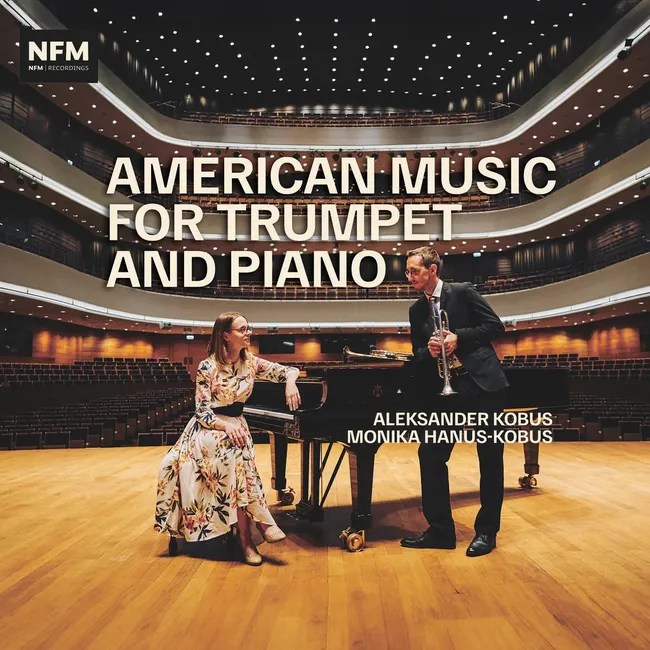
As a trombonist, I’ve had the privilege of collaborating on countless meaningful projects, but few have resonated as deeply as American Music for Trumpet and Piano. This album, led by Aleksander Kobus, the principal trumpet of the NFM Wrocław Philharmonic, and his wife the exceptional pianist Monika Hanus-Kobus, brings to life a rich tapestry of North American compositions spanning six decades.

When Alek invited me to contribute, I was instantly drawn to his vision: a celebration of the trumpet’s pivotal role in the cultural fabric of the United States. From its roots in jazz and marching bands to its prominence in orchestral masterpieces, the trumpet tells a story of resilience, innovation, and artistry. Adding trombone to this narrative felt to me like an opportunity to bring depth and texture to an already remarkable musical journey.

The repertoire is a showcase of creativity and contrast, reflecting the evolution of Neoclassicism and tonal music. Pieces by composers like Halsey Stevens, Joseph Turrin, and Kevin McKee pushed us to explore the delicate interplay between tradition and modernity. Each composition presented a new challenge: to blend the warm, lyrical voice of the trombone with the trumpet’s brilliance and the piano’s expressive power, creating something truly unique.

The recording process was a harmonious collaboration between respected colleagues. Alek’s clarity of vision and Monika’s artistry made every session feel like an inspired dialogue. We shared ideas and embraced the nuances of each piece, united by a common goal—to honor this music and bring it to life with authenticity and passion.

The premiere performance on December 19, 2024, was unforgettable. Performing these works live, feeling the energy of the audience, and seeing our interpretations resonate beyond the studio was both humbling and exhilarating. Supported by the National Forum of Music and CD Accord, the album’s release is a moment I’ll treasure—a celebration of the trumpet’s legacy and the beauty of North American music.

As the album reaches new listeners, I hope it sparks the same sense of wonder and connection we experienced during its creation. It stands as a testament to the trumpet’s enduring legacy, the richness of American compositions, and the profound power of collaboration that unites musicians across the globe.

How many times have we thought, “who cares?,” when not holding a note long enough, not breathing in the designated place, or skipping over an articulation that is clearly indicated in the part? Details are commonly regarded as, “the small stuff,” and  are deemed unimportant, or even superfluous. With that in mind, think about what happens when any number of these tiny elements start to pile up, what can we expect of the performance quality in the end? Can overlooking the details result in failing to reach even an average product?

The answer is: Absolutely. The importance given to details depends on the desired quality of the product. If the desired level of achievement is  average or better, attention to detail is of the utmost importance. For an outstanding product it is mandatory: A great product cannot be realized without focusing on details.

Dream cars, high quality clothing articles, fine dining, luxury watches, these are all examples of goods where details are examined and perfected at every stage of production: From the initial concept to the final product, through the quality of materials, special techniques used to form them, the research and development of new materials and techniques, and the quality control measures used to scrutinize them before sale…

What makes these products so expensive, rare, and scarce? What puts them within the reach of only a small number of consumers? The price tag  summarizes the value of the time and standard adhered to during their production. The careful effort put into producing an outstanding product results in the brand and its image. Although the price tag may seem “expensive” from a quantitative point of view, the price asked matches the worth: No more no less.

No detail should be overlooked, big or small. Hence intense scrutiny when identifying them becomes intrinsically crucial. Like the production of the goods described above, when it comes to the instrument, it is during practice that precise craftsmanship should take place. Elements needed to insure such a product are: Careful work and execution of all the components mandatory to play the instrument, exhaustive research and understanding of playing mechanics, and the development of precise planning, which fulfills all technical aspects in each stage of practice. Being meticulous and discerning throughout the production process is obligatory if the result desired is to beget great value.

The result of practice with focus on details results in a product that represents the mastery of those details. It is this product that stands apart from what is merely average.

Because of the relatively low degree of complexity, long tones are one of the first things young musicians work on.  Although, at the time, the reason of their study may be unclear to the student, the teacher’s directive is reason enough to focus on their practice. Understanding and acknowledging the importance of long tone practice is the first step toward their mastery and the benefits associated with playing them well.

The apparent simplicity of the long tone, however, is deceptive: when a result is so straightforward, there is no place for individual aspects of its composition to be hidden when they are not working. It comes down to: ‘Is the final product being delivered or not?’. This means being able to hold a note straight without any variation on intonation or the appearance of elements that distort the sound quality (like a lip’s double buzz, trembling, or a ‘bacon sizzle’ effect due to the presence of spit in the embouchure’s aperture). The sound that is being produced should be defunct of any dullness, and instead have an interesting, resonant, singing quality. Furthermore, (and this is the most cumbrous aspect of the challenge) all these points should be addressed throughout the dynamic range and register of the instrument.

The benefits associated with long tone practice are the facts that they comprise the bulk of our orchestral repertoire, and that they assist in the development of other playing aspects, such as control and endurance, by making the vibrating and supporting lip effective. Thus both of the aforementioned turn the outgoing air into as many vibrations as possible, hence making the use of the embouchure more efficient as well as increasing its endurance.

The aspects that have to work well in conjunction to produce a good long tone are:

  • An effective and efficient embouchure (a vibrating lip that is flexible and responsive, a supporting one that is strong, firm and helps keep the vibrations one in place, and a strong, yet pliable, set of face muscles which work as a frame, allowing the vibration from the lips to take place). The embouchure must be solid, yet malleable: Solid in order to keep a note straight with no variation, yet limber enough to change between registers and dynamics with ease).
  • A constant and supportive use of the air stream (always in balance with the embouchure, not providing more air than one can handle, or failing to produce enough air for the embouchure to work properly).
  • A relaxed and efficient use of the body (allowing it to be used as a resonance chamber in the production of the sound).

A solid mental concept of the sound you want to generate is also important: Here a personal preference of mine comes into play. When I envision my ideal note, I focus on a sound that is appropriate to the instrument I am playing. Not too big, resulting in an unfocused sound, nor too small, resulting in a nasal quality, but rather in the center: A sound that is beautiful, active, interesting, solid without being harsh, and always with a singing quality.

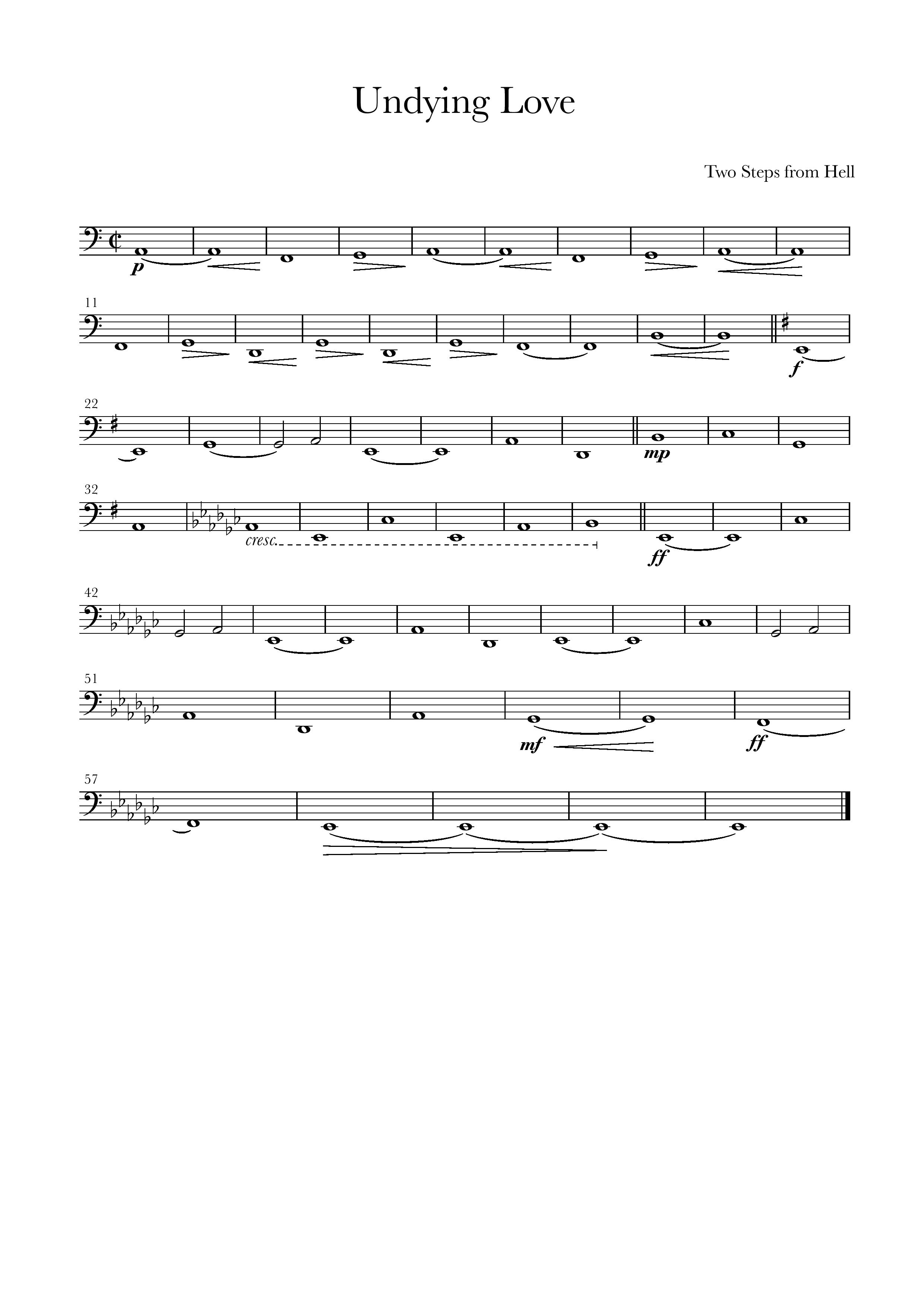
I have to admit, for me, working on long tones is hard from the standpoint of motivation: they are not among the most compelling and stimulating of exercises. Being able to practice them over a long period of time begs for an incentive to do so. I came to the conclusion, that practicing them within a musical context that I favor, makes them far less cumbersome. I often practice my long tones within the context of music that I like, such as this excerpt composed by Two Steps from Hell. (For a more traditional approach to long tones, check the Exercises section)

Two_steps_from_hell 16 Undying Love(1)-page-001

Things to keep in mind while practicing long tones:

  • Do not limit practice to only one dynamic or register.
  • Avoid the use of isolated embouchures which allow you to get one good note at the expense of all the others. Consolidate the embouchure you play with to allow ease during a change in register, always anchor the mouthpiece on the same spot and keep all notes within the same embouchure to reduce any movement needed to a bare minimum.
  • Be mindful with the use of shortcuts that force out the sound, like excessive pressure or tension in the body which may have harmful effects in the long run.
  • Mouthpiece practice will assist in identifying sound inconsistencies that might be occurring while playing long notes. For success while practicing on the mouthpiece, try to keep the same embouchure setting and mouthpiece placement as the one you use with the instrument.

Efficiency was defined in the previous post as being able to accomplish something with the least waste of time and effort. Effectiveness applies to the quality of the final product, it is the degree to which addressed problems are solved. As I like to say: Doing it right.

What is right? It is not doing it perfectly: Perfection is an unattainable and unrealistic goal that often leads to frustration. Trying to achieve something to the best of your ability is a sounder solution, as well as a more realistic and attainable goal.

At some point we have all become slaves to routine and have unconsciously been more permissive and complacent regarding things that we normally would not allow: a slower and sloppier slide technique, an improper playing posture, shallower breathing, etc. Why does this happen? It is likely the result of issues with concentration, enthusiasm, or simply not being aware of what is required to perform an activity to the best of our own ability.

A proper level of concentration is needed in order to fulfill a goal. An inappropriate level of concentration can cause harm in either extreme: not being concentrated enough can drive us to overlook the treatment of important aspects that could lead to improvement, while being concentrated beyond need can prevent us from attaining aspects that require a simple and natural approach.

It is difficult to be able to perform at our highest level when there is no disposition to do so. Following the same principle as concentration, if excessive enthusiasm (or extreme impulse) is given to the practice of one mere aspect, we spend all our time on that one aspect, rather than giving appropriate attention to all important aspects.

I remember when I used to play computer games, each had a number of minimum requirements that had to be met in order to assure adequate performance of the game. If they were not met, the computer struggled and the game would run poorly or not at all. I believe that similar minimum requirements combine in order to achieve the highest level of performance. There are three aspects that have to be understood and have to work properly: The breathing, the embouchure (a very good study about the embouchure’s performance can be found at wilktone.com), and the slide technique. It is not enough to work on them separately: The way we manage their practice and combine them in performance is extremely important.

Are there other concepts that could insure quality without increasing quantity of the study? There certainly are, but that would be in another post.